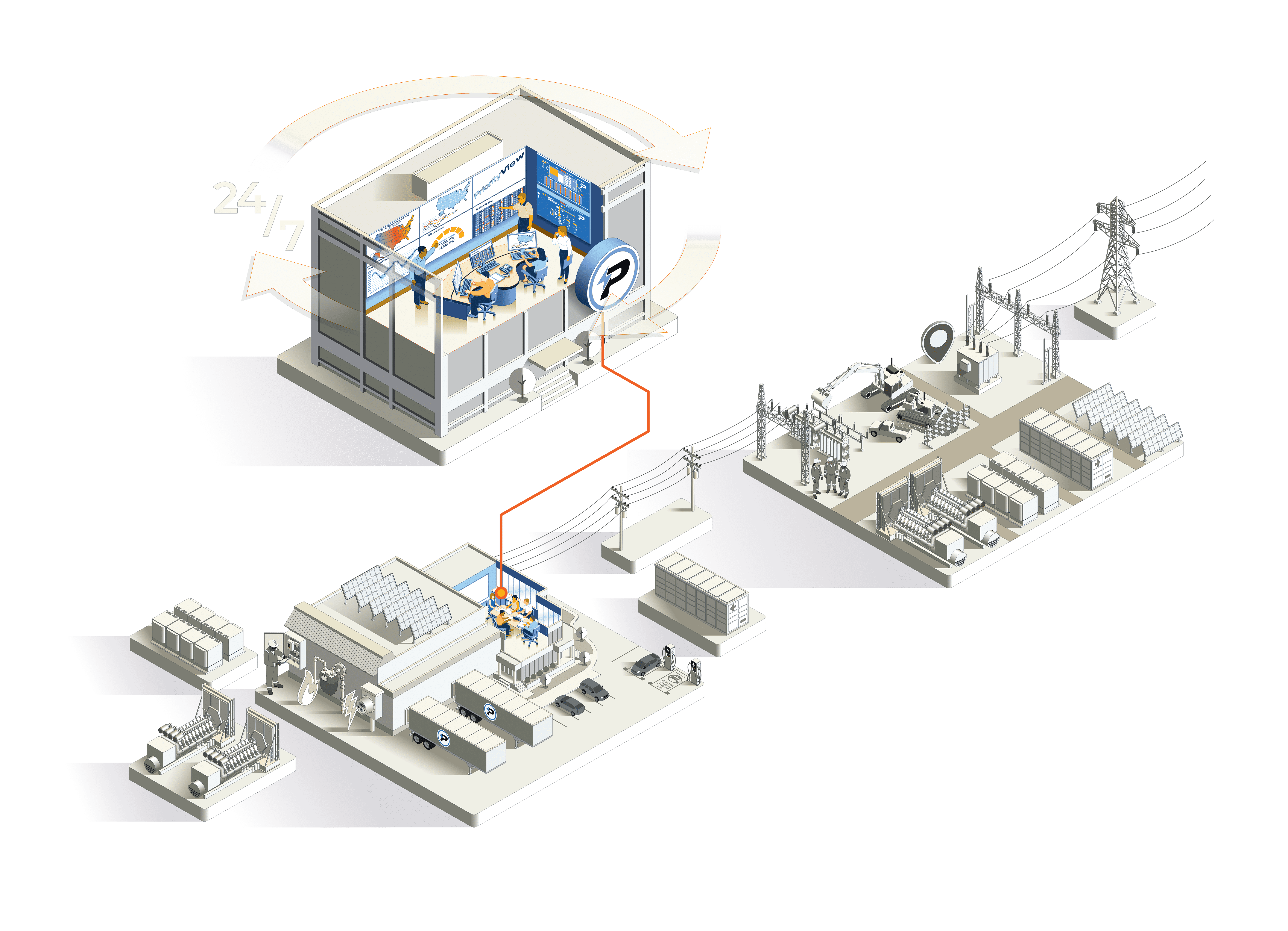
Because of the high reliability standards of these critical industries, our aerospace and defense energy solutions focus on eliminating single points of failure. We offer aerospace power supply with redundant utility feeds, onsite power generation, microgrids, and islanding capabilities to ensure continuous, reliable power built for zero-tolerance environments.
Yes. Projects often require adherence to NERC, DoD, CMMC, FERC, and site-specific security requirements. Early alignment avoids costly redesigns.
With experience in large energy, we offer portfolio-wide rate optimization, energy procurement strategies, energy hedging and onsite power plans. Defense manufacturers often save millions through tariff restructuring alone.
Yes. Many aerospace and defense companies deploy energy renewables, backup storage, microgrids, and efficiency upgrades while adhering to strict industry standards and supporting their mission.
Yes. Site selection is critical for success in data centers, AI campuses and HPC installations. Early decisions have major implications on power availability, energy cost structure, speed to market, long-term scalability and operating resilience.
We offer full energy lifecycle support for data center site selection:
- Evaluation of power availability and upgrade potential: we assess existing substation capacity, transmission constraints, and likelihood that utilities can deliver large-scale power in required timelines.
- Utility engagement and interconnection services: we manage grid interconnection requests (load and generation) and engage early with utilities to define realistic timelines, high-voltage concept designs, grid interconnection schemes, cost estimates and phased energization options.
- Regulatory and permitting: we examine local, state and federal energy permitting considerations, environmental impact factors, zoning compatibility and community acceptance.
- Market and cost modeling: we compare long-term energy price outlooks across markets and estimate the impact of various tariff structures on OPEX.
- Expansion viability: we identify locations positioned for multi-phase buildouts or future megawatt-scale needs.
- Building private High-Voltage (HV) infrastructure: we support the design and development of private high voltage substations that allow you to reduce operating costs over time.
Our team ensures that prospective sites align with your development goals and are evaluated through the lens of speed, cost, risk, and reliability – giving you confidence before capital is deployed.
Power interconnection timelines vary widely by utility and region, but for large loads (20 MW to 500+ MW), customers typically experience 18–36+ month timelines for permanent utility grid interconnections. This is driven by:
- Utility engineering studies, including system impact and detailed design
- Grid upgrades, such as new feeders, transformer or substation expansions
- Permitting, which may involve local, state, and federal agencies
- Construction, which depends on material lead times and labor availability
Because delays can impact project economics and competitive positioning, Priority Power works to compress or de-risk timelines through strategies such as:
- Phased grid interconnection planning, achieving early partial energization
- Temporary distributed generation, including natural gas, mobile turbines, or battery energy storage system (BESS)
- Behind-the-meter generation, providing immediate power and/or reducing dependence on long utility timelines
- Parallel permitting and design workstreams to avoid linear delays
Where grid conditions permit, we can also assess prime power-based campus designs that allow fast deployment while preserving the path to long-term utility supply.
Successful data center location strategy requires optimizing several competing factors. Priority Power helps customers build a transparent model around:
Cost
- Long-term energy price forecasting
- Demand charges and tariff structures
- Availability of incentives, tax exemptions and economic development programs
- Cost of necessary grid upgrades or private infrastructure
Reliability
- Grid strength, stability and redundancy
- Substation load growth and congestion outlook
- Feasibility of adding dual feeds or onsite generation
- Resilience against severe weather or regional grid stress
Speed to Market
- Existing available capacity or near-term upgrade paths
- Local permitting friendliness and political support
- Land entitlement requirements
- Fiber connectivity and construction logistics
Priority Power integrates all considerations, and provides a location scorecard to help customers select optimal sites that support near-term deployment speed without compromising long-term cost or scalability.
Energy is one of the largest OPEX drivers for data centers, AI and HPC facilities. Priority Power identifies and executes energy cost reduction strategies across the full lifecycle:
- Rate and Tariff Optimization: we analyze utility tariffs, negotiate with providers, identify favorable rate riders and recommend cost-efficient demand structures tailored to your load profile.
- Renewable Energy Procurement and Hedging: through Power Purchase Agreements, Virtual Power Purchase Agreements (VPPAs), REC strategies and solar plus storage solutions, we lower long-term energy costs while providing predictable price stability.
- Demand Response and Market Participation: we evaluate whether your operation can safely participate in programs that provide revenue or lower costs through controlled load curtailment or ancillary services.
- Onsite Generation: options include natural gas, combined heat and power, renewable systems and battery energy storage. These reduce grid dependence, mitigate peak charges and improve resilience.
Over time, these strategies can materially reduce annual energy costs while improving the flexibility and resilience of your facility.
This would narrow the scope from “hybrid renewable-plus-storage” slightly, but there is much more SEO around “solar plus storage” (from competitors as well). From my research it just seems like a more specific term for a renewable source. May need client approval to change.
Yes. The next generation of data centers—from hyperscale to AI-optimized clusters—are pursuing ambitious sustainability goals without sacrificing uptime or compute density. Priority Power helps customers design and operate facilities that meet or exceed ESG targets through:
Clean Energy Strategy
- 24/7 carbon-free energy sourcing
- Long-term renewable Power Purchase Agreements
- Energy storage integration
Carbon Accounting and Compliance
- Lifecycle carbon analysis
- Scope 2 emissions tracking
- Regulatory and voluntary reporting support
Resilient + Sustainable Solutions
Through microgrids, hybrid power systems, natural-gas-to-hydrogen transition pathways and advanced controls, customers can achieve high reliability and strong sustainability outcomes simultaneously.
Bitcoin mining success depends heavily on power cost, reliability and access to scalable infrastructure. Priority Power helps you identify and evaluate locations that offer:
- Low, predictable energy prices
- Available or expandable grid utility capacity
- Strong energy transmission connections
- Permitting environments that support fast development
We provide detailed site-selection support so you can deploy quickly and operate profitably from day one.
Bitcoin mining is flexible, but still requires stable, consistent power to protect equipment and maintain uptime. Priority Power ensures:
- Voltage stability and quality feeding to your site
- Minimal unplanned outages
- Predictable restart and energy curtailment operations
We design energy strategies that maximize bitcoin mining performance while giving you the ability to earn revenue through grid interconnection programs.
Is there a larger phrase that could technically be used here, i.e. “power feeding” or “energy feeding”? Not super important to update, just curious of potential keywords and couldn’t find them myself
Yes. For many bitcoin miners, these hashprice and energy curtailment strategies are a major source of revenue. Depending on your market, you could earn revenue from:
- Load scheduling and demand response
- Frequency regulation and ancillary services
- Agreements with power utilities or system operators
We evaluate your bitcoin mining site’s specific opportunities and help you build an energy management strategy that turns flexibility into profit.
Most operations today begin at 10–100+ MW, with room to scale as economics allow. Priority Power models the right grid interconnection size for your business by reviewing:
- Power economics
- Grid capacity and load ramp
- Expansion potential over 3–5 years
We guide you to a grid interconnection strategy that fits both your immediate and long-term growth targets.
Timelines depend on the availability of existing energy capacity near your site:
- Existing utility capacity: Energization in 6–12 months
- New power infrastructure needed: Typically 18–30 months
To accelerate deployment, Priority Power can also help implement temporary or phased energy procurement and infrastructure solutions, including mobile power generation or staged grid interconnection plans that let you begin operations earlier.
There are multiple advantages of working with an energy consultant over a supplier:
- Market choice: Energy consultants shop multiple suppliers; suppliers only sell their own product.
- Customer advocate: Energy consultants are independent and represent the customer, not a single supplier.
- Contract protection: Energy consultants analyze contract terms and prevent costly fine-print pitfalls.
- Strategic guidance: Energy consultants provide a strategy to meet client’s goals. We monitor the market and help lock in pricing at the right time. Not just show rates.
- Ongoing support: Energy consultants handle billing issues, renewals, and account management.
We are paid either via embedded margin or a consulting retainer. In the embedded margin model, our margin is already included in the pricing presented and we get paid by the supplier you end up choosing. There will be no line item for Priority Power on your bill or additional invoice from us sent.
This answer varies by company, depending on your risk appetite, budget certainty preferences and goals. It could look like any of the following:
- Fixed price = budget certainty / upside market protection
- Floating price = higher risk (volatility)/higher reward (lower historical average prices)
Block and Index = Fix a % and float a %, middle ground/balanced approach but adds complexity
Priority Power offers multiple advantages:
- We have among the most robust energy supplier networks in the country, giving clients the most options while maximizing competition and pricing as a result
- We use industry-leading market intelligence and proprietary energy analytics to quantify risk and simplify decision-making with energy data.
- We go beyond energy procurement with comprehensive expertise across the entire energy value chain including infrastructure, demand response and renewables
Yes. We can assist with commercial energy procurement in all areas where deregulation exists for the desired commodity. Other services, like budgeting and tracking tools, can be utilized for all locations.
Yes. We help with REC procurement, On-site and Community Solar, off-site PPAs/VPPAs, utility green tariffs, EV charging solutions, and energy efficiency projects.
We can provide a general range, but every customer load profile is different and is subject to unique energy pricing as a result. In order for us to get energy pricing, we just need an authorization form and an invoice copy. Commercial energy pricing takes approximately one week to turn around from our power supplier network , which allows time for them to obtain the data they need from the utility and model pricing.
“Energy supplier” tends to appear in more relevant searches than “power supplier”, but if this is a specific term for the client to keep, we can.
This depends on energy market dynamics. Based on long-term historical data, an index strategy with the energy commodity price floating on the market has yielded a lower average cost over time. This is because there is no additional risk premium included in pricing that comes along with hedging the commodity; the supplier is simply passing through market cost.
Priority Power can include your current energy supplier and force them to compete with the rest of the market. The competition we generate reduces power supplier margin in the transaction, lowering overall price. If you currently get pricing from one power supplier, how do you know you are getting the lowest price?
Energy deregulation means that the generation and supply side of electricity or natural gas is opened to competition, rather than controlled by a single government-regulated utility or local distribution company. In a deregulated energy market, customers can choose their energy supplier for the supply portion of their bill and power suppliers compete on price and product offerings.
No, we work with all energy suppliers. By creating and managing competitive bid scenarios, we can review and verify pricing submissions for accuracy, and make recommendations to our customers based solely on the best risk-adjusted value.
In ERCOT, we are Level 4 QSE and perform all demand response programs in-house. Outside of ERCOT, we utilize 3rd parties but are finalizing our CSP registration in other energy markets such as PJM and other ISOs.
Yes, we have the expertise to create many types of renewable energy solutions, including energy management and energy procurement for healthcare & medical facilities, and more.
Yes, we bring the same best-in-class consultative value to natural gas procurement as we do for electricity supply.
Yes, we have extensive experience developing full-scale behind-the-meter solar and energy storage facilities.
Choosing the most reliable backup energy solution depends on several factors unique to your facility. We match your energy requirements with the right technology.
Our typical approach includes:
- Understanding your energy load profile (i.e., critical loads, peak demand, backup power duration, equipment sensitivity) to determine if you need full-facility energy backup or selective load coverage.
- Identifying ride-through requirements to evaluate batteries/UPS systems for momentary ride-through (seconds) or generator/BESS/hybrid power solutions (longer ride-through), all while ensuring compliance with regulatory, insurance or operational guidelines.
- Evaluating on-site equipment feasibility such as available space, fuel type, noise, emissions, permitting and utility/grid interconnection
- Supporting energy lifecycle cost, reliability, and operational benefits with energy solution comparisons of Battery Energy Storage Systems (BESS), UPS systems, natural gas/diesel generators and microgrid solutions with solar, BESS and power generation for enhanced resilience.
- Designing a Customized Energy Reliability Plan, to meet compliance, operational continuity, budget, site and future load growths.
There are several ways to purchase our energy solutions:
- Build/Transfer: Priority Power does the build, and transfers ownership to you once the energy project is complete
- Infrastructure as a Service (IaaS): Priority Power builds, owns and operates the energy project
- Operations and Maintenance: Regardless of ownership, Priority Power provides ongoing operations and maintenance of the energy project
If the market drops after you fix your rate, there may be options like a blend and extend, where you combine your current rate with a lower market rate and extend the contract term to take advantage of savings.
Energy contracts include assignment language, which allows the agreement to transfer to the new owner without issue.
The majority of energy contracts allow for flexibility in usage. Consult with your Priority Power energy advisor about planned changes in consumption when contracting.
There are many factors to consider. First, determine if the reason for considering alternative power generation is to meet corporate sustainability goals, improving energy reliability, lowering costs or something else. Then, research requirements for grid interconnection, backup power from utility and emission standards. Finally, conduct a detailed cost benefit analysis of each option available to meet the issues identified above.
Also consider whether a 3rd party lease and maintenance agreement will be financially better than leasing from a utility or paying a higher rate under a lower voltage tariff.
A trusted advisor, like Priority Power, can help gather all market intelligence for the region where your company operates, and monitor market trends and forward curves to evaluate which time period has the highest level of certainty. By sharing your risk tolerance to market swings, you can settle on a term that works best.
We understand manufacturing margins depend on predictable, optimized energy spend. Here’s how we can help:
- Strategic electricity and natural gas procurement across regulated and deregulated markets
- Energy hedging strategies to manage price risk
- Load forecasting and budgeting tools
- Our proprietary platform, PriorityView provides real-time price monitoring and market intelligence, backed by $2.3B+ in annual client energy spend and 3 GW+ of executed energy procurement
Unplanned downtime is costly, and utility timelines often limit growth. We can help improve the reliability and capacity of our energy infrastructure through:
- Substation design, development and monitoring
- Private transmission and distribution infrastructure
- Lease or ownership models for capital flexibility
- Behind-the-meter solar, battery and thermal storage
- High-voltage construction with >20% annual savings vs. utility service. We have over $1B in high-voltage projects and have completed $750M+ in private infrastructure.
Manufacturers expanding capacity can face a two to seven-year delay from utilities. Priority Power can expedite this process via:
- A “speed to power” model to help remove the utility as your bottleneck
- Early-stage highvoltage engineering and modeling
- Rapid grid interconnection processes
- Land control and entitlement support
- Multi-utility coordination (power, gas, water/sewer, fiber)
- Delivery of “Powered Land” sites with pre-secured energy capacity
Pulp & Paper is one of the most energy-intensive industries in the world. This makes decarbonization hard and CAPEX intensive because it requires a lot of energy to run large, continuous processes that can’t easily start/stop. Priority Power can help enhance your operational resiliency through substation engineering & EPMC, private transmission and distribution (T&D) to reduce utility delays, and onsite generation – all while reducing CAPEX burden through our infrastructure as a service (IAAS) leasing model.
Additionally, we can lower manufacturing energy costs by optimizing retail energy procurement in deregulated states, monetizing load flexibility through demand response and cathodic protection, and optimizing tariffs and rates in regulated states.
Would recommend just going with “cathodic protection” as a result of irrelevant search traffic around “CP mitigation”; not sure if this changes the meaning of the phrase or service for PPM
We believe energy is more than a utility – it’s core feedstock as one of your largest raw material categories. In deregulated markets, energy can become a financial asset to optimize through hedging, load shifting and demand response. Deregulated energy markets have fewer tariff choices, so Behind-the-meter generation and efficiency can materially improve costs and reliability.
We utilize a centralized portfolio view on a unified data platform for all of your plants’ consumption, tariffs and contracts. This creates a coordinated hedge and procurement strategy across your entire manufacturing asset base.
No, we work with all energy suppliers. By creating and managing competitive bid scenarios, we can review and verify pricing submissions for accuracy, and make recommendations to our customers based solely on the best risk-adjusted value.
In ERCOT, we are Level 4 QSE and perform all demand response programs in-house. Outside of ERCOT, we utilize 3rd parties but are finalizing our CSP registration in other energy markets such as PJM and other ISOs.
Yes, we have the expertise to create many types of renewable energy solutions, including energy management and energy procurement for municipalities & co-ops, and more.
Yes, we bring the same best-in-class consultative value to natural gas procurement as we do for electricity supply.
Yes, we have extensive experience developing full-scale behind-the-meter solar and energy storage facilities.
Choosing the most reliable backup energy solution depends on several factors unique to your facility. We match your energy requirements with the right technology.
Our typical approach includes:
- Understanding your energy load profile (ie critical loads, peak demand, backup power duration, equipment sensitivity) to determine if you need full-facility energy backup or selective load coverage.
- Identifying ride-through requirements to evaluate batteries/UPS systems for momentary ride-through (seconds) or generator/BESS/hybrid power solutions (longer ride-through), all while ensuring compliance with regulatory, insurance or operational guidelines.
- Evaluating on-site equipment feasibility such as available space, fuel type, noise, emissions, permitting and utility/grid interconnection
- Supporting energy lifecycle cost, reliability, and operational benefits with energy solution comparisons of Battery Energy Storage Systems (BESS), UPS systems, natural gas/diesel generators and microgrid solutions with solar, BESS and power generation for enhanced resilience.
- Designing a Customized Energy Reliability Plan, to meet compliance, operational continuity, budget, site and future load growths.
- There are several ways to purchase our energy solutions:
- Build/Transfer: Priority Power does the build, and transfers ownership to you once the energy project is complete
- Infrastructure as a Service (IaaS): Priority Power builds, owns and operates the energy project
- Operations and Maintenance: Regardless of ownership, Priority Power provides ongoing operations and maintenance of the energy project
Yes. We work with oil & gas companies to negotiate and secure the most favorable energy contract terms and pricing in competitive power markets, to meet client budget and risk objectives. We also work with operators to identify the fastest, most economical way to deliver uninterrupted power to new or existing assets across the county, including evaluating utility extensions, private HV infrastructure (i.e substations), onsite generation, hybrid power systems (solar, battery, and gas) and temporary power solutions. We’ve completed over $1B in private HV infrastructure in West Texas and SE New Mexico.
Our goal is to provide the right balance of cost, reliability and speed-to-market so projects can stay on schedule and within budget.
Energy is a major driver of LOE, particularly for compression, SWDs, ESPs and other ancillary facilities. We act as an extension of our client’s team, bringing value to the enterprise and reducing OPEX through:
- Contract negotiation and procurement advisory
- Onsite generation and technology evaluation
- Rate tariff optimization
- Demand management and peak shaving strategies
- Renewable energy integration, when economically beneficial
These strategies deliver long-term cost stability and measurable savings across multi-asset portfolios.
We help operators electrify energy operations by:
- Integrating renewables, battery storage or microgrids where appropriate
- Assessing grid availability and upgrade needs
- Designing electrification roadmaps for multi-pad or multi-basin development
- Modeling emissions reduction and regulatory compliance impacts
This allows operators to improve reliability, reduce emissions and lower operating costs simultaneously.
Yes. Energy reliability in oil and gas is often a top concern for operators. Priority Power designs systems that improve power uptime and reduce operational disruptions using:
- Hybrid power solutions (grid + generation + storage)
- Backup or redundant power supply
- Power quality monitoring and optimization
- Microgrid configurations for mission-critical sites
Whether the goal is to stabilize artificial lift, ensure compression uptime or maintain critical automation systems, we build energy resilience solutions in oil and gas that keep operations running smoothly.
Priority Power was founded during the dawn of deregulation, by veterans with decades of experience in power and gas. With hundreds of years of direct utility experience, the Priority Power team is unmatched in the energy industry. Learn more about what makes us here.
We offer several solutions designed to “bridge the gap” at oil and gas sites, and get you operational long before the utility’s long-lead upgrades are complete:
- Bridge and backup power microgrids or mobile power generation: we design and implement backup architecture, bridge power and load shedding programs to support five-nines reliability and keep essential loads powered. We also deploy diesel, natural gas or hybrid mobile generators to supply partial or full site power. This is often the fastest way to get immediate capacity at oil and gas sites while permanent infrastructure is being built.
- Substation design & construction or on-site microgrids: we offer substation design and implementation of capacity upgrades, builds, load management and leasing solutions to improve uptime and scale for growth. In addition, a combination of generation (natural gas, solar power, battery storage) can be installed as a temporary or permanent microgrid. This reduces the amount of utility capacity you need and can continue supporting oil and gas operations even after utility service arrives.
- Behind-the-meter solutions or Battery Energy Storage Systems (BESS): behind-the-meter solutions and on/offsite project management can increase grid reliability during outages or congestion. A battery system can help you manage peak loads and reduce the total capacity you need from the utility. In some cases, this can allow oil and gas operations to begin with a smaller utility feed while waiting for the full upgrade.
- Load Management / Phased Energization: we can evaluate whether your oil and gas site can be energized in stages—starting with essential loads first—until full capacity becomes available.
Yes. We offer both Infrastructure as a Service (IAAS) and Resiliency as a Service (RAAS) models, for power infrastructure on demand and back-up microgrid power – all without upfront capex, complexity or risk of owning and operating. Rather than waiting for permanent utility service, we can deploy temporary or long-term power assets under an energy lease or service agreement, allowing you to start oil and gas operations sooner without a large upfront investment.
Accelerating utility timelines can also be possible by funding certain components of the upgrade, taking ownership of on-site infrastructure, or using a 3rd party (like Priority Power) to engineer, procure and construct the needed equipment faster than the utility.
No, we work with all energy suppliers. By creating and managing competitive bid scenarios, we can review and verify pricing submissions for accuracy, and make recommendations to our customers based solely on the best risk-adjusted value.
In ERCOT, we are Level 4 QSE and perform all demand response programs in-house. Outside of ERCOT, we utilize 3rd parties but are finalizing our CSP registration in other energy markets such as PJM and other ISOs.
Yes, we have the expertise to create many types of renewable energy solutions, including energy management for universities, energy procurement for schools and more.
Yes, we bring the same best-in-class energy consulting services to natural gas procurement as we do for electricity supply.
Yes, we have extensive experience developing full-scale behind-the-meter solar and energy storage facilities.
Choosing the most reliable backup energy solution depends on several factors unique to your facility. We match your energy requirements with the right technology.
Our typical approach includes:
- Understanding your energy load profile (ie critical loads, peak demand, backup power duration, equipment sensitivity) to determine if you need full-facility energy backup or selective load coverage.
- Identifying ride-through requirements to evaluate batteries/UPS systems for momentary ride-through (seconds) or generator/BESS/hybrid power solutions (longer ride-through), all while ensuring compliance with regulatory, insurance or operational guidelines.
- Evaluating on-site equipment feasibility such as available space, fuel type, noise, emissions, permitting and utility/grid interconnection requirements.
- Supporting energy lifecycle cost, reliability, and operational benefits with energy solution comparisons of Battery Energy Storage Systems (BESS), UPS systems, natural gas/diesel generators and microgrid solutions with solar, BESS and power generation for enhanced resilience.
- Designing a Customized Energy Reliability Plan, to meet compliance, operational continuity, budget, site and future load growths.
There are several ways to purchase our energy solutions:
- Build/Transfer: Priority Power does the build, and transfers ownership to you once the energy project is complete
- Infrastructure as a Service (IaaS): Priority Power builds, owns and operates the energy project
- Operations and Maintenance: Regardless of ownership, Priority Power provides ongoing operations and maintenance of the energy project
Yes, demand response programs (ERS, LR, ECRS, Non-Spin) are like an insurance policy for ERCOT. They pay a premium whether there is an event or not. When there are no events, payment is like mailbox money (no work is needed to get paid).
Over the last two years (2024 and 2025), no events have been called. Several factors have caused this: (1) milder summers/winters and (2) the growth of Battery Energy Storage Systems (BESS). BESS systems will continue to play a major role in keeping the grid in balance for 2026 thus, lower risk of DR events for the immediate future.
Yes, your company will determine the load enrollment (non-critical load that will be enrolled into the program) and the actual curtailment of the load. Most companies curtail their own electrical load via automation systems or physically opening breakers.
It depends on the demand response program that you are enrolled in. If it is an Ancillary Program (RRS, ECRS, Non-Spin), yes, you can change your enrollment level daily for the next 24 hours. In an ERS (Emergency Response Service), which is not an Ancillary Program, your enrollment level cannot be changed once the season starts. ERS seasons consist of winter (Dec-Mar), spring (April-May), summer (June-Sept) and fall (Oct-Nov).
Payment is based on a split, for example, (75/25) meaning the customer received 75% of gross payment from the program, Priority Power receives 25% of gross payment from the program. Depending on the program, ERCOT disperses payment 60-90 after the month or season is completed.
Priority Power offers several solutions to help save on power costs:
- Load Management / Demand Response: we can evaluate opportunities to reduce or shift usage during peak hours when prices are highest. Participating in peak shaving and load management programs can generate revenue and lower your effective cost of electricity.
- Power Contract Restructuring: we can review your current contract structure and look for ways to take advantage of lower-priced hours. This may include reshaping your energy profile, adjusting term length or evaluating hybrid market products.
- Divesting Infrastructure Assets: if you own energy-related infrastructure, we can help evaluate opportunities to divest those assets. This can reduce capital burdens and shift maintenance risk while improving long-term cost efficiency.
- O&M Services for Energy Infrastructure: our team can provide operations and maintenance support to ensure your equipment runs efficiently. Better system performance often reduces consumption and extends asset life.
Yes. When the market is shifting, it can be beneficial to evaluate alternative contract structures. Fixed-price contracts provide stability, but they may not always capture potential savings when prices move. Depending on your usage profile and risk tolerance, you may want to consider:
- Block-and-Index / Hybrid Products: lock in a portion of your load at a fixed rate while allowing the remaining usage to follow the market. This can reduce your blended cost when off-peak or real-time prices are favorable.
- Time-of-Use or Shaped Pricing: if your operations align with lower-priced hours, we can structure a contract that takes advantage of those periods instead of paying a flat rate around the clock.
- Index-Based or Floating Products: these follow market prices and can offer savings when the market softens. They require more risk tolerance but can be paired with energy hedging strategies for protection.
- Managed Procurement Strategy: instead of locking everything in at once, we can layer in hedges over time. This spreads out market risk and can improve pricing outcomes in a volatile environment.
Priority Power offers several solutions that allow you to improve the reliability of your facility without large upfront capital expense. Instead of purchasing energy equipment outright, we can structure reliability projects so that PPM finances, owns, or operates the assets while you benefit from improved performance.
- Build-Own-Operate (BOO) or Build-Own-Operate-Maintain (BOOM): we can develop, finance, own, and operate backup generation, batteries, or microgrid assets on your site so that you avoid capital expenditure and pay only through a service or availability fee. We handle maintenance, compliance and performance guarantees.
- Long-Term Leasing or Service Agreements: instead of buying equipment, you lease it which provides predictable monthly costs and no upfront capital. Full O&M support is included.
- Reliability-as-a-Service (RaaS): we provide the equipment—generators, BESS, UPS systems, or microgrid components—and you pay only for reliability delivered, not the asset itself. This is ideal when uptime is critical but budgets are tight shifting financial and operational risk away from you.
- Load Management / Demand Response Revenue: we can help you participate in ERCOT demand response programs, which provides cash flow that can offset reliability costs, reduces your effective energy spend and improves operational resilience by managing peak loads.
- Infrastructure Optimization: we can evaluate existing power infrastructure to determine what can be reused or upgraded at minimal cost, what can be deferred and how to right-size the reliability system to avoid over-spending